No Coat Remains Whole: Louis Theroux and the Manosphere
Netflix Weaponizing the Fringe to Bury the Refuge

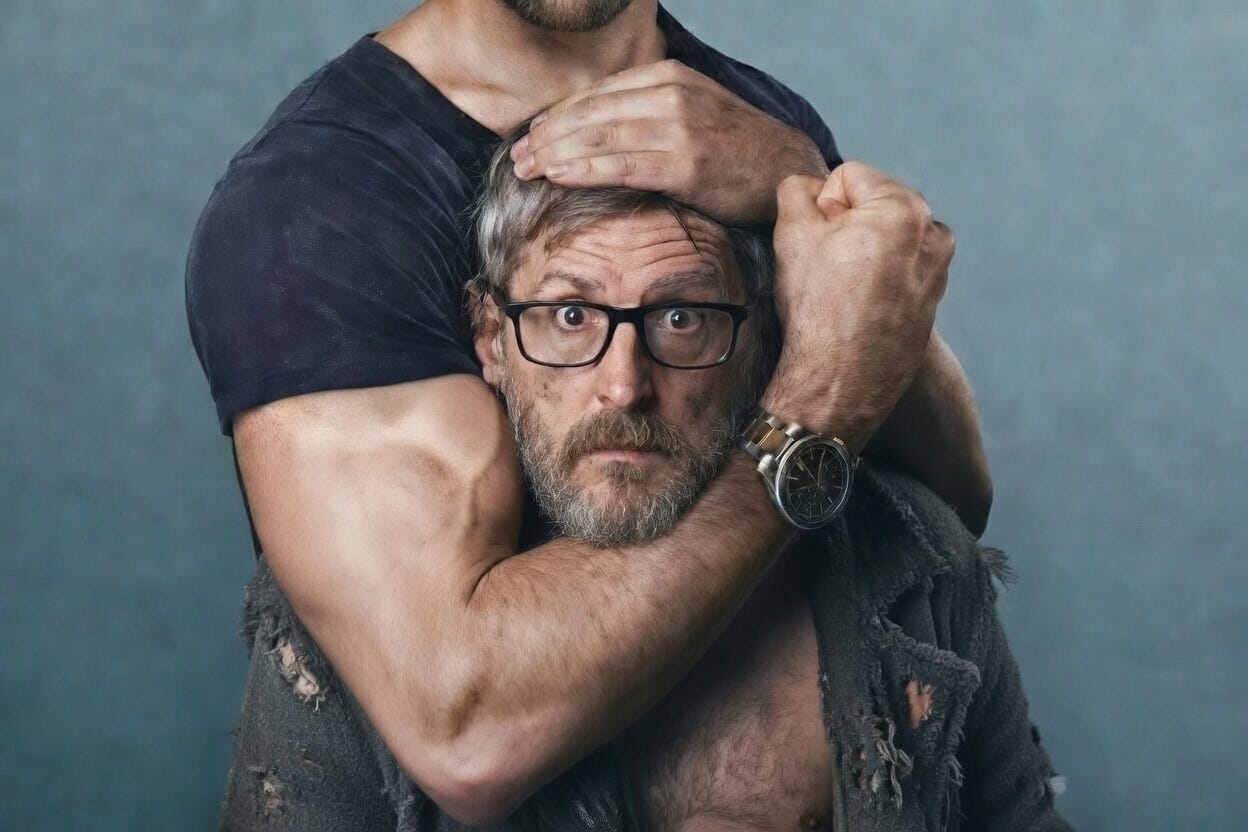
The opening thirty seconds of Louis Theroux’s Netflix documentary Inside the Manosphere already reveal the sleight of hand. The influencers he profiles mutter that they’ve walked into another hit piece. They’re half right—and entirely wrong about the real target.
These men damage their own reputations with little outside help. Their words do the work. The film devotes almost its entire runtime to these grifters—people who monetize shock value, crude anti-feminist rhetoric, and rage-bait—showcasing their worst moments while presenting this limited slice as representative of the manosphere.
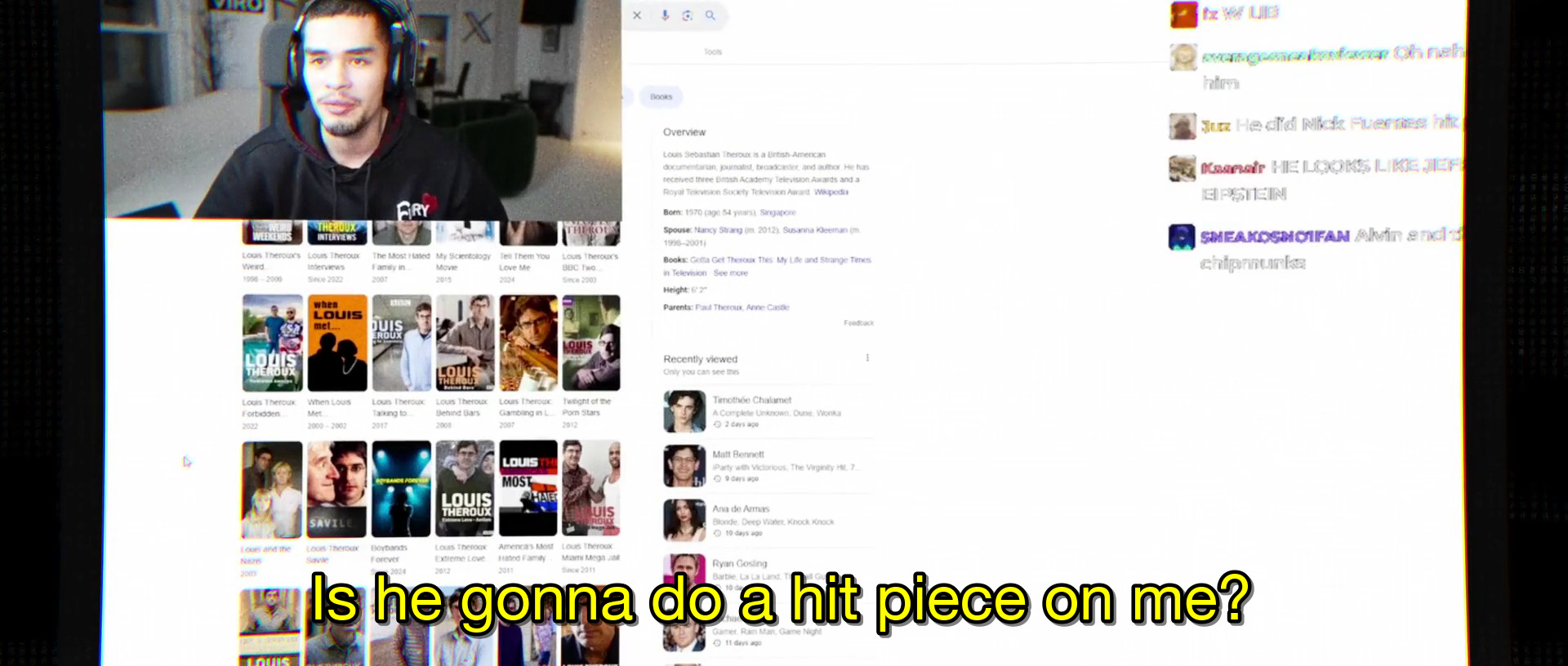
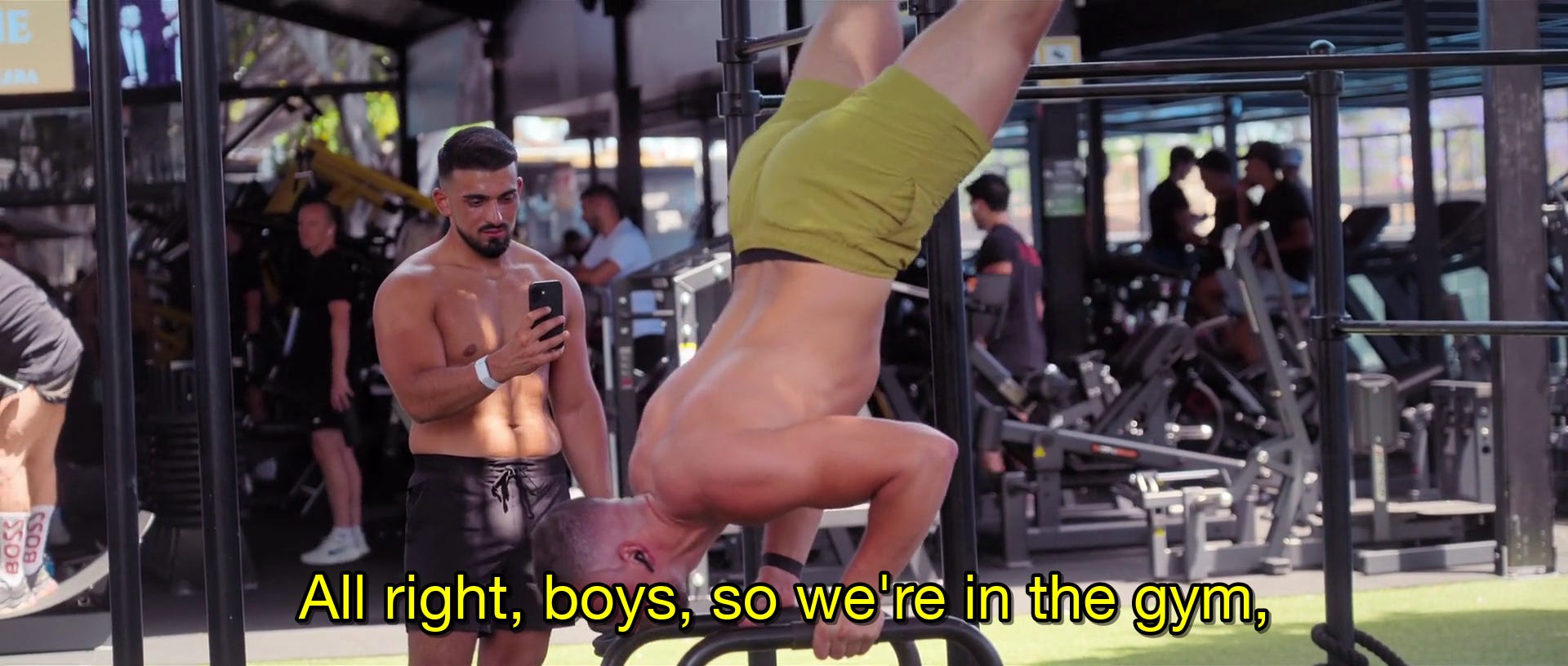
The practical, non-extreme content that actually dominates these platforms—fitness routines, career guidance, financial independence, realistic dating advice, mental-health discussions—barely appears. That omission is intentional. If the everyday self-improvement videos were shown, the narrative of a “toxic masculinity epidemic” would lose its force. Instead, the frame is set so the provocateurs condemn themselves, allowing the film to imply their behavior indicts millions of boys simply trying to improve their lives.
Imagine applying the same lens to women’s online spaces—focusing only on the most extreme femcel rants, misandry, or cynical grift. The reaction would be immediate and intense. When the target is men, this approach is often praised. The double standard is obvious.
This selective framing is not an accident of editing. It stems from a deeper reluctance to address the question the film itself raises.
It Dodges the Real Question: Why Are Young Men There?
Theroux asks why boys are drawn to these spaces but does not pursue a serious answer. Brief mentions of “vulnerability” and “fatherlessness” serve as placeholders before he moves on to the next provocative clip.
The underlying causes remain largely unexamined: boys raised on messages that masculinity is inherently toxic or defective; schools that discipline natural male energy while showing little understanding; male suicide rates four times higher than women’s, with mental-health support disproportionately directed toward girls; economic stagnation, truancy problems, and the disappearance of positive male role models. When young men express frustration, society often responds with indifference or suspicion rather than concern. Many, like Harrison Sullivan, grow up in father-absent homes—raised primarily by single mothers who shoulder the burden alone. This leaves boys without positive male guidance and deepens the alienation the film merely labels.
Neither the state nor welfare systems can fill this void; our culture faces a profound crisis in family structure and fertility — An article for another day.
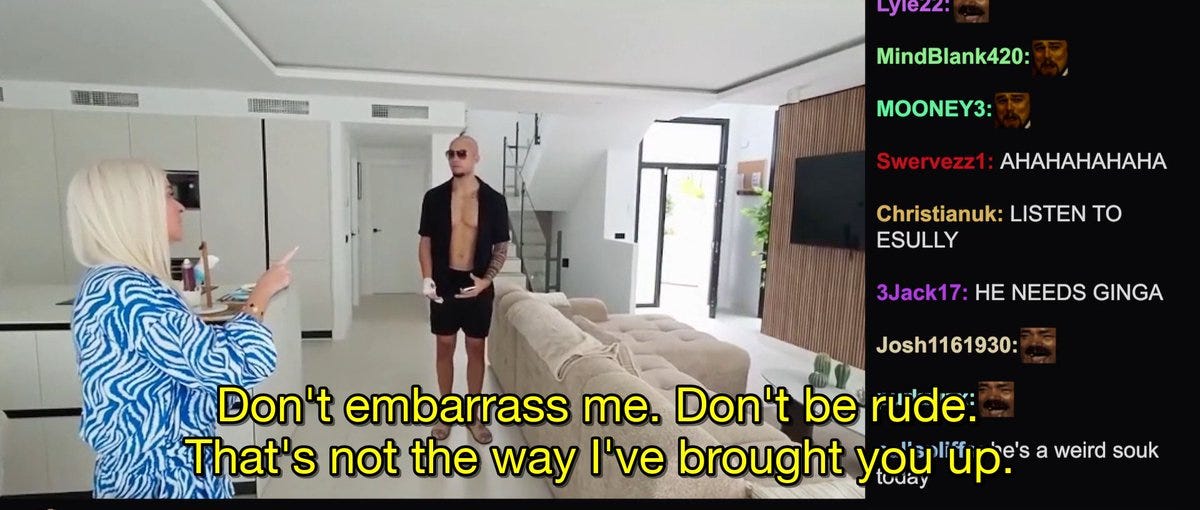
In this environment, the manosphere proper provides what mainstream institutions do not: direct honesty without shame, validation, a sense of belonging, and practical direction for young men who feel erased unless they conform to certain ideological expectations. For most users, this is not about hatred of women but about reclaiming dignity in a culture that has frequently devalued male contribution.
By refusing to engage this context, the film becomes part of the problem: it highlights isolated extremes while avoiding the broader cultural conditions that drive young men online. The result is a one-sided portrayal that amplifies fringe behavior for attention, gives controversial figures more exposure, and ultimately widens the disconnection it purports to examine.
Subversive Censorship Agenda
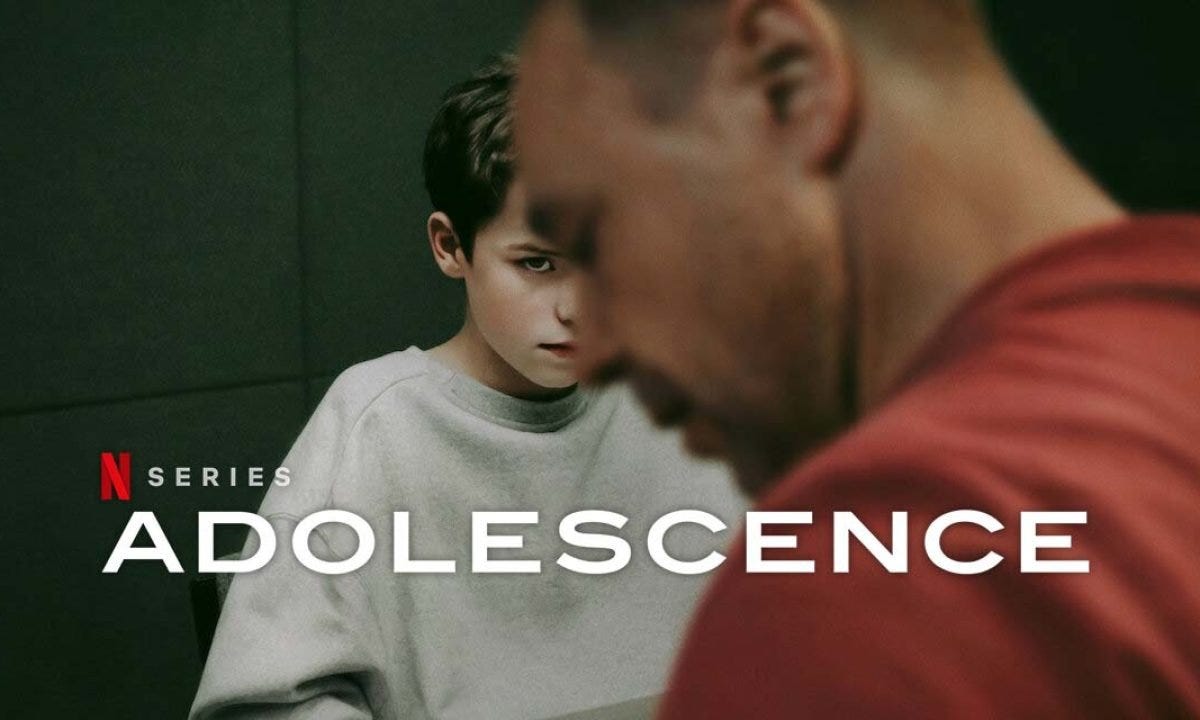
Like Netflix’s earlier production Adolescence—presented as documentary truth despite being scripted fiction, and even cited by Keir Starmer in Parliament to justify mandatory school screenings—the manosphere film follows a similar pattern of intellectual sleight of hand.
Adolescence helped the most unpopular government in British history entrench the Online Safety Act, which has led to over twelve thousand arrests in a single year for online speech—far more than in any other country. As of early 2026, the Act’s enforcement has already seen young men arrested for tweets questioning gender ideology or criticising migration policy—views once considered mainstream opinion now reframed as “harmful content.” The documentary arrives at exactly the moment such speech is being criminalised at scale.
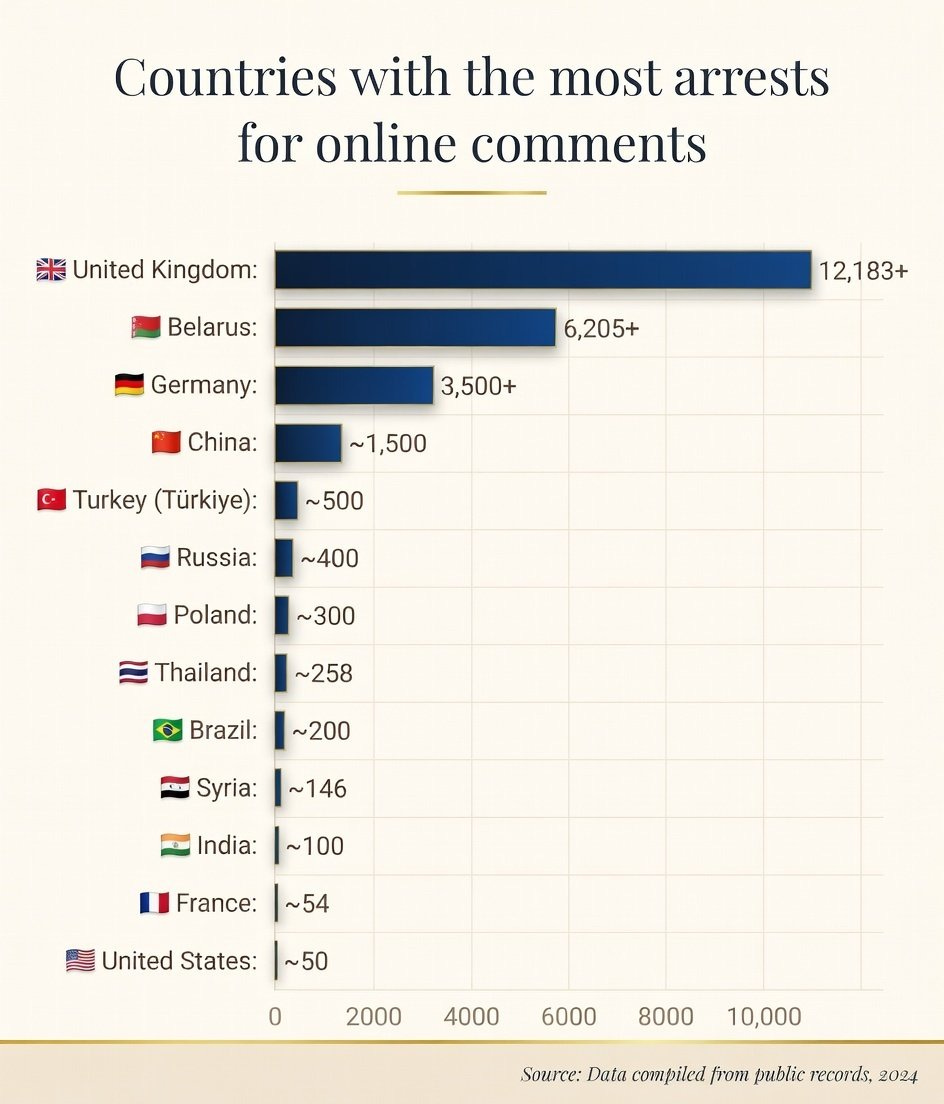
This represents systematic pressure on young men whose views on masculinity, borders, and cultural identity were once protected under basic free-expression principles.
Inside the Manosphere is polished and watchable. It will likely be referenced to support further censorship, expanded definitions of “harm,” and stronger measures against dissenting male voices—all framed as safeguarding society from the very alienation the state has helped produce.
Yet while these pressures increase, the manosphere continues to offer what official channels and mainstream culture often withhold: clear, constructive guidance for young men seeking purpose and self-respect. The film’s complete avoidance of that guidance is not accidental.
Erased Alternatives: Voices the Film Refuses to Engage
These figures have served for years as serious role models within the broader manosphere. They provide philosophical grounding, moral clarity, relational realism, and daily discipline—precisely what many institutions no longer offer.
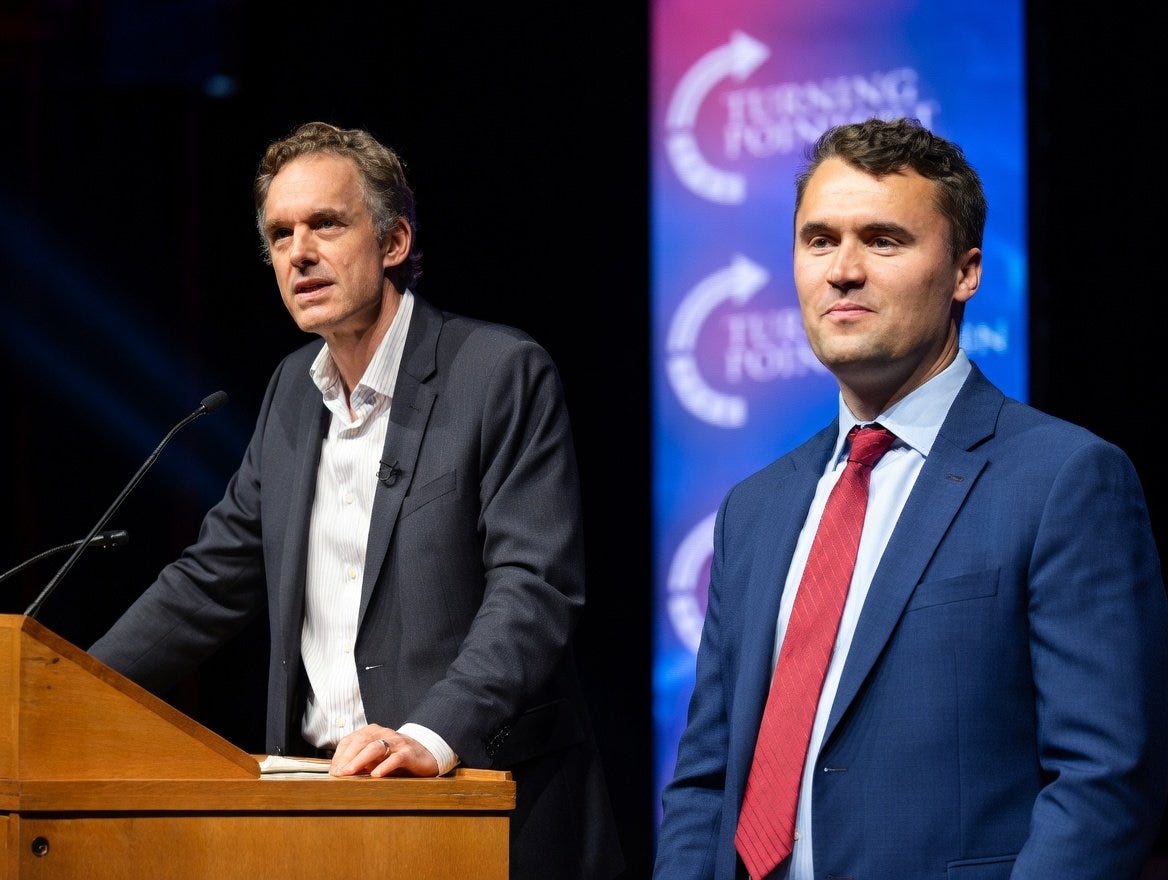
Jordan Peterson has critiqued enforced equality of outcome as coercive, demonstrated how sex differences become more pronounced in freer societies, and rejected blanket claims of “toxic masculinity” as mischaracterizing normal male traits that can be directed toward purpose.
Charlie Kirk took that insight directly to college-age men: masculinity is not broken; it is needed. He offered a map built on strength, responsibility, faith, family, and country, encouraging action toward purpose and fatherhood. His life tragically cut short by assassination in 2025; his message endures.
Rollo Tomassi developed one of the earliest systematic frameworks for understanding modern dating dynamics and hypergamy from a male perspective. His work has helped many men build their own value and approach relationships with realism and confidence rather than idealization or resentment. Tomassi himself described the Netflix production as a “manosphere circus” and pointed instead to the substantive interviews he and others are conducting for a documentary the platform would never touch.
When mainstream sources ignore male struggles—alienation, lack of direction, rising suicide rates—resentment can fill the gap. These figures offer guidance toward growth instead.
The film never engages them. It chooses spectacle over substance.
The “Manosphere” Label: A Weaponized Conflation
The term “manosphere” in this film functions as a broad smear, lumping together legitimate men’s-rights issues, everyday self-help content, and extreme fringes into a single toxic category. The provocateurs are marginal; the real draw is practical self-improvement and community support. By conflating the two, the film discredits the entire space.
This allows male grievances to be dismissed as misogynistic by association, without separating the valid from the reckless. The underlying goal is to delegitimize the manosphere as a legitimate cultural response.
Netflix has consistently promoted narratives that frame “toxic masculinity” as primarily a Western, white-male issue, spotlighting incels, rage-bait influencers, and online misogyny while rarely applying the same scrutiny elsewhere.
The politically convenient target—Western men—receives relentless attention. More immediate, demographically driven threats to women’s safety are left comparatively unexamined.
This selective focus points to a protected epidemic—one the same cultural authorities who scrutinize every Western masculine failing decline to address with equal seriousness.
The Mirror Held: A Fleeting Dostoyevskian Reckoning
Theroux confronts Harrison Sullivan (HSTikkyTokky), who publicly condemns women with OnlyFans accounts as “disgusting” and morally bankrupt—going so far as to say he would disown a future daughter for doing it—yet privately promotes those very accounts on his Telegram channel (with around 500,000 followers) and quietly pockets a cut from the referrals and promotions.
Sullivan’s response is textbook self-justification: he acknowledges the glaring contradiction without flinching, shrugs it off, and declares that profit overrides principle—“Do I agree with it? No. Would I profit from it? Yeah,” he says frankly, framing himself as a pragmatic “salesman” in the “attention economy.” Theroux does not shout, does not preach, does not interrupt. He simply holds the mirror in place, forcing the man to confront the emptiness staring back.
“That’s a good question.”
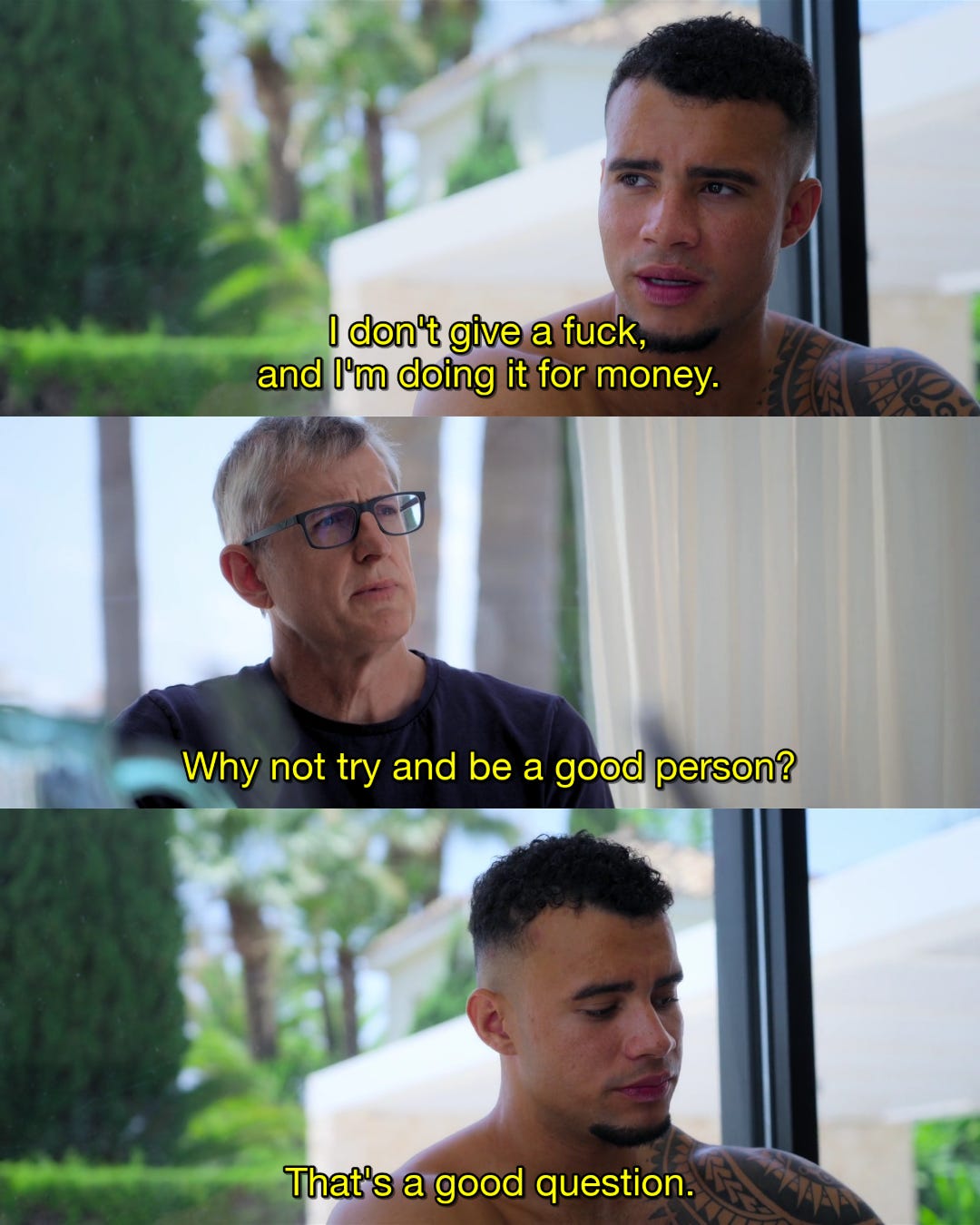
A flash of self-awareness amid the rationalization, acknowledging the hypocrisy for a heartbeat before it slips away. Yet he rejects any parallel to figures like Bonnie Blue who pursue similar paths for profit.
This is pure Dostoevsky: the terrifying spectacle of a soul adrift without anchor. In Crime and Punishment, Pyotr Petrovitch Luzhin rationalizes selfishness, mocking Christian charity and insisting that ruthless self-interest alone keeps “your coat whole”—private gain supposedly benefits society without personal sacrifice.
Dostoevsky’s verdict is merciless: without a higher moral anchor, ruthless self-interest yields nakedness, not collective good—the man who hoards his coat at another’s expense ends up exposed, coat in tatters, dignity in shreds, alone in the cold.
Sullivan is Luzhin reborn in the attention economy. This worldview—profit overriding principle, outrage turned commodity, contradiction excused as pragmatism—pervades the influencer class. Classical philosophy has long warned: sever morality from transcendent accountability, and reckoning follows as night follows day.
In this single exchange, Theroux achieves what the rest of the film largely avoids: genuine moral scrutiny. He probes not for viral gotchas, but for the internal rot—the question of what becomes of the soul when the sacred is stripped away and “your coat remains whole” becomes the highest good. It is damning that the documentary squanders this rare moment of depth, opting everywhere else for surface-level spectacle over the harder work of understanding why men drift into such hollow contradictions.
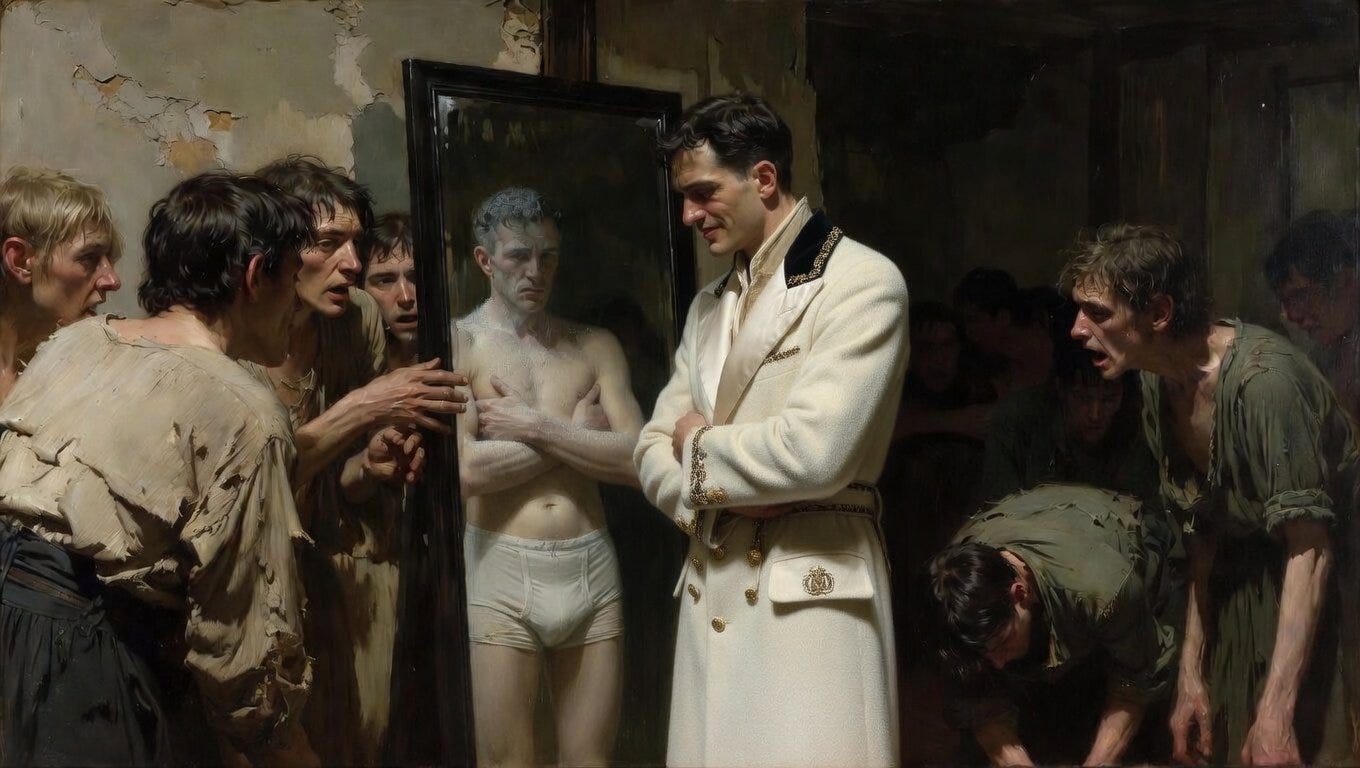
Young men are not inherently dangerous. They are people who have been given conflicting messages, offered little support, and then criticized for the anger that results. They are brothers, sons, and part of the next generation. Women, too, face their own forms of alienation and cultural pressure—yet the documentary’s selective lens rarely extends the same curiosity to them. Young men deserve understanding—and a society willing to confront its own failures instead of scapegoating the generation it neglected.
Theroux had an opportunity to examine that failure deeply. He chose a shallower path instead. Ultimately, the film fails to indict the manosphere. What it reveals instead is the emptiness at the heart of the influencer economy: a hollow pragmatism that promises shelter but delivers none. As Dostoevsky showed through Luzhin, when principle is sacrificed to profit, no coat remains whole.